|
|
||
 |
|
|
Walter Jenkins
No / Rank: 36279 Private
Regiment: Welsh Regiment
(Formerly 18809 South Wales Borderers)
Battalion: 1st Battalion
Born: Machen, Mon.
Enlisted: Newport, Mon.
Residence: Machen, Mon.
Date Died: 02.10.1916
How Died: Killed in Action
Theatre of War: France and Flanders
Brigade: 84th Division: 28th (Regular Army)
Commemorated
at the Loos Memorial.
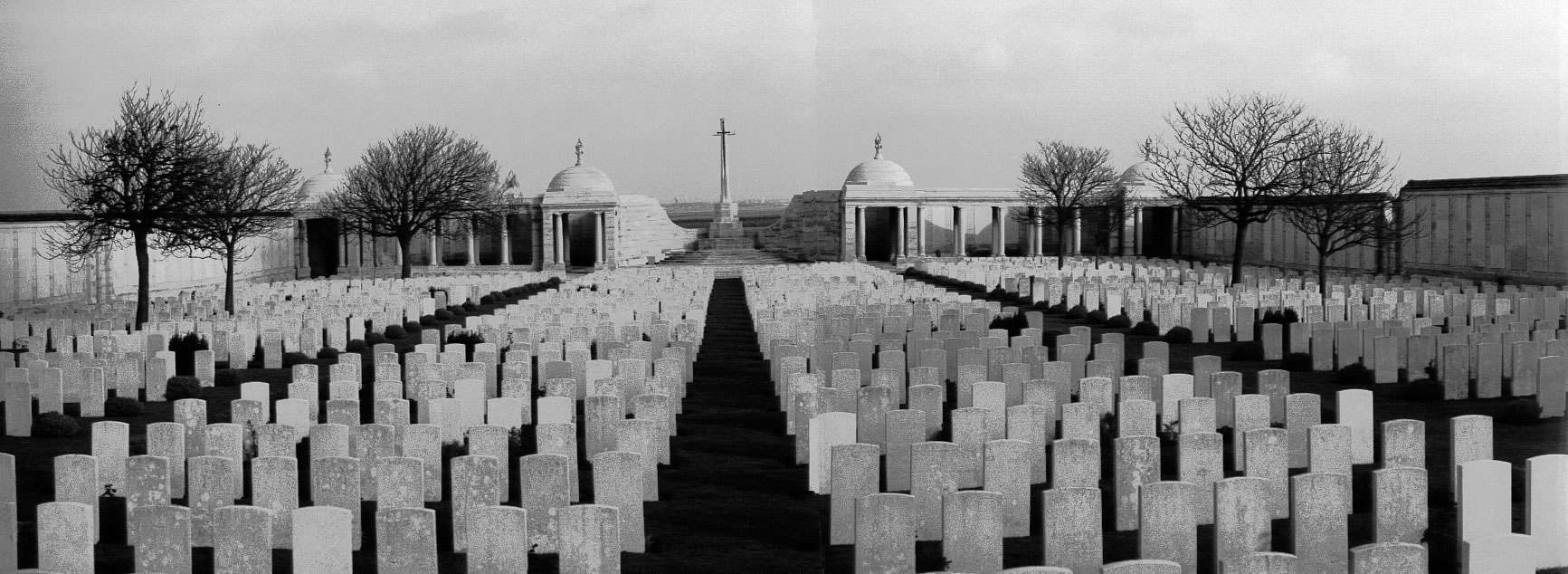
Private Walter Jenkins joined his battalion in France on May 5th 1915, having previously served with the South Wales Borderers. He is commemorated on the Loos Memorial to the Missing, Dud Corner, 5 kms west of Lens. The memorial lists over 20,000 British troops who have no known grave and is located almost on the site of a German strongpoint, the Lens Road Redoubt.
The Battle of Loos (25th September – 4th November 1915) was one of the first major British Offensives of the Great War. After the initial success of the first day of the battle in September a bloody stalemate ensued.
The 1st Battalion of the Welsh Regiment was to attack a trench - Little Willie - adjacent to a strongpoint known as the Hohnzollern Redoubt (see later entry). during the night of 1st October 1915. The attack began well with the Battalion getting to within 100 yards of their objective before being discovered.
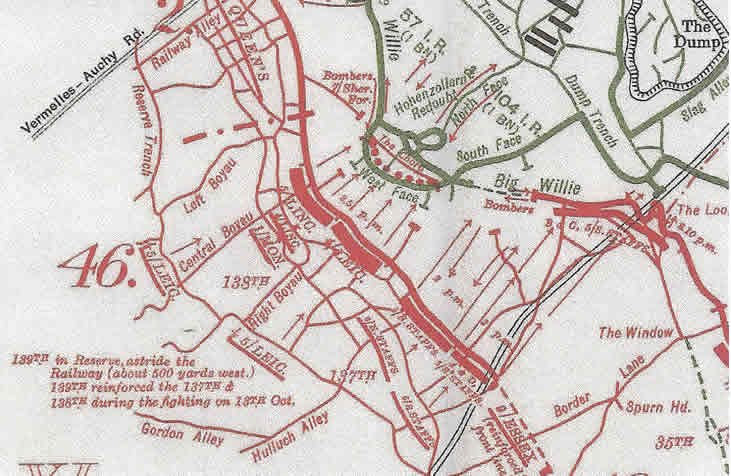
‘Then from both flanks machine guns opened fire. The commanding officers voice rang out “forward the 41st, get at ‘em Welsh” In 20 seconds there were 250 men and a proportion of officers on the floor the remainder were in the trench bayoneting those in the trench and firing at the retreating Prussian Guards……………It was a gallant little affair.
The confusion brought about by the poor state of the trenches left the battalion cut off from food, water, ammunition and reinforcement. The battalion attempted to link their isolated position with the British line by digging towards the front line trenches. At one point the regimental history describes an incident where 14 men in succession were killed whilst attempting continue trench digging in an exposed position, the area so small that only one person at a time could work. The battalion was under almost continual artillery fire and suffered numerous grenade attacks.
‘The whole night and morning was spent in bombing battles on each flank. The Welsh had the best of these battles wounding and taking prisoners – by 10 am the bombs were finished – the enemy’s supplies were unlimited. The situation was serious. Having no bombs the enemy moved up gradually from both flanks. The enemy opened up with a minenwerfer shell this is what the soldiers call “sausage up”. The shell, having reached the distance it is regulated for, drops down perpendicularly and can be seen all the way and can be dodged – the men were now so congested it was impossible to get out of the way. – When one lands in a trench six men in the vicinity disappear.
The diary goes on to say that ‘These operations were carried out with tired troops who had been in the trenches and moving from one position to another as reserve troops for eight days and eight nights’. All officers behaved magnificently but the casualties were very severe 370 N.C.O.’s and men 15 officers.
On the 3rd of October the 1st Welsh were relieved and moved back to Vermelles after being without food or water for 48 hours. The attack failed to meet any of its key objectives.
Walter Jenkins is commemorated at the Loos Memorial.